Distribution of Health Providers for Severe Obesity
Treatment Providers for Severe Obesity - It takes a village: promote provider training and collaboration to improve access.



The Online GLP-1 Marketplace
The Online GLP-1 Marketplace
July 31, 2026
A recent research letter published in JAMA by Chetty et al describes the experience of a secret shopper in obtaining GLP-1 receptor agonists (GLP-1 RA) from online sources.

Understanding PMOS
Understanding PMOS
June 30, 2026
PCOS was recently renamed polyendocrine metabolic ovarian syndrome (PMOS) to address the inadequate treatment that has resulted from its perception as a condition limited to fertility.

Lessons from the STOP Obesity Alliance: A Reflection on Obesity Advocacy
Lessons from the STOP Obesity Alliance: A Reflection on Obesity Advocacy
May 29, 2026
This month's author is, Aden Belay, MPH, the STOP Obesity Alliance student research assistant who recently graduated from the Milken Institute School of Public Health.
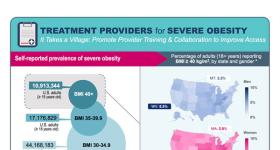
Distribution of Health Providers for Severe Obesity
Treatment Providers for Severe Obesity - It takes a village: promote provider training and collaboration to improve access.
Pregnancy-Related Weight Change & Obesity
A growing body of evidence indicates that obesity has a detrimental impact on reproductive potential in women.

National Employee Well-Being Month
June 2018 marked the tenth annual National Employee Wellbeing Month (NEWM).
HCP Beliefs About Causes, Accommodations & Techniques
Earlier this year, we published findings from a 2016 national survey.

Rationale for People-First Language
Language matters. The words we use to discuss health and disease directly impact beliefs, behaviors, and experiences.
Obesity is characterized by the accumulation of excess body fat (adiposity) that presents a risk to health.

Over the past decade, researchers have explored the link between social relationships and individual health outcomes.

It is likely that the proportion of cancer cases and deaths attributable to obesity will continue to rise in the U.S. and globally over the next decade.
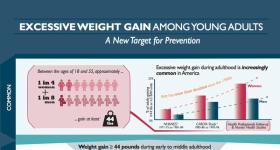
Excessive Weight Gain Among Young Adults
A New Target for Prevention – The rising in obesity prevalence between the ages of 6-11 years and 20-39 years - from 17 to 34 percent - indicates that the transition from childhood to young adulthood is a critical window for obesity prevention and control efforts.
Year in Review, Looking Forward
Thank you to our STOP Obesity Alliance members and partners for your dedicated efforts to improve obesity prevention and treatment this past year.

Subscribe below to receive STOP's monthly email packed with insights from experts in obesity prevention and treatment, details on upcoming events, and exciting news from our member organizations!