Fast Facts – Benefits of Weight Loss
Weight loss can be beneficial, not only for an individual’s health, but also for their financial wellbeing. Those who lose weight could save hundreds or thousands of dollars, depending on their BMI.



The Online GLP-1 Marketplace
The Online GLP-1 Marketplace
July 31, 2026
A recent research letter published in JAMA by Chetty et al describes the experience of a secret shopper in obtaining GLP-1 receptor agonists (GLP-1 RA) from online sources.

Understanding PMOS
Understanding PMOS
June 30, 2026
PCOS was recently renamed polyendocrine metabolic ovarian syndrome (PMOS) to address the inadequate treatment that has resulted from its perception as a condition limited to fertility.

Lessons from the STOP Obesity Alliance: A Reflection on Obesity Advocacy
Lessons from the STOP Obesity Alliance: A Reflection on Obesity Advocacy
May 29, 2026
This month's author is, Aden Belay, MPH, the STOP Obesity Alliance student research assistant who recently graduated from the Milken Institute School of Public Health.
Fast Facts – Benefits of Weight Loss
Weight loss can be beneficial, not only for an individual’s health, but also for their financial wellbeing. Those who lose weight could save hundreds or thousands of dollars, depending on their BMI.
National Childhood Obesity Month
September is National Childhood Obesity Month. Childhood obesity continues to be a growing problem.
COVID-19 and Childhood Obesity
With many schools returning to in-person instruction, the health of children has become a new contentious focus of the COVID-19 pandemic.
Obesity, COVID-19, and Racial Disparities
This month's newsletter is written by guest author Fatima Cody Stanford.

Fast Facts – Racial Disparities and Obesity
COVID-19 has pulled back the curtain on racial disparities in health care. Some communities of color are experiencing higher rates of hospitalization or death from COVID-19. These disparities are not limited to infectious diseases; racial minorities experience higher rates of chronic diseases, death, and disability compared with white Americans.
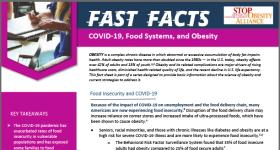
Fast Facts – COVID-19, Food Systems, and Obesity
Because of the impact of COVID-19 on unemployment and the food delivery chain, many Americans are now experiencing food insecurity. Disruption of the food delivery chain may increase reliance on corner stores and increased intake of ultra-processed foods, which have been shown to cause obesity...
Mental Health and Obesity during COVID-19
May is Mental Health Awareness Month and this year it’s more important than ever.
Statement from the STOP Obesity Alliance and the Redstone Global Center
Racism, oppression and white supremacy have no place in our vision for the future of our country and we stand with those fighting against it.
Pharmacotherapy for Adolescent Obesity
Recent attention has focused on the indications for and use of drug therapy in adolescents.

Subscribe below to receive STOP's monthly email packed with insights from experts in obesity prevention and treatment, details on upcoming events, and exciting news from our member organizations!